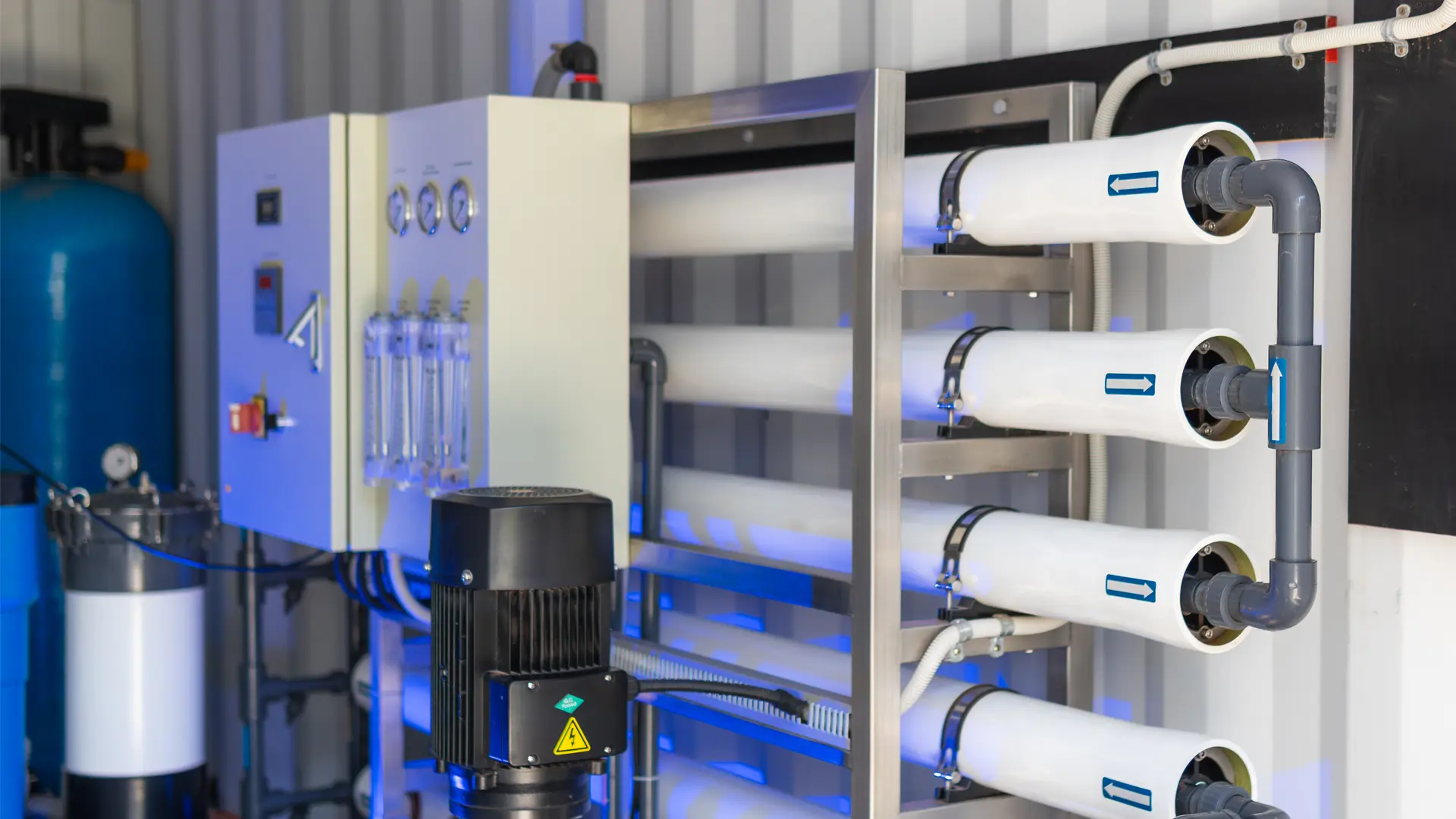
Find Brackish Water Desalination Systems
Browse our brackish water desalination systems below — or request a quote for a custom build.

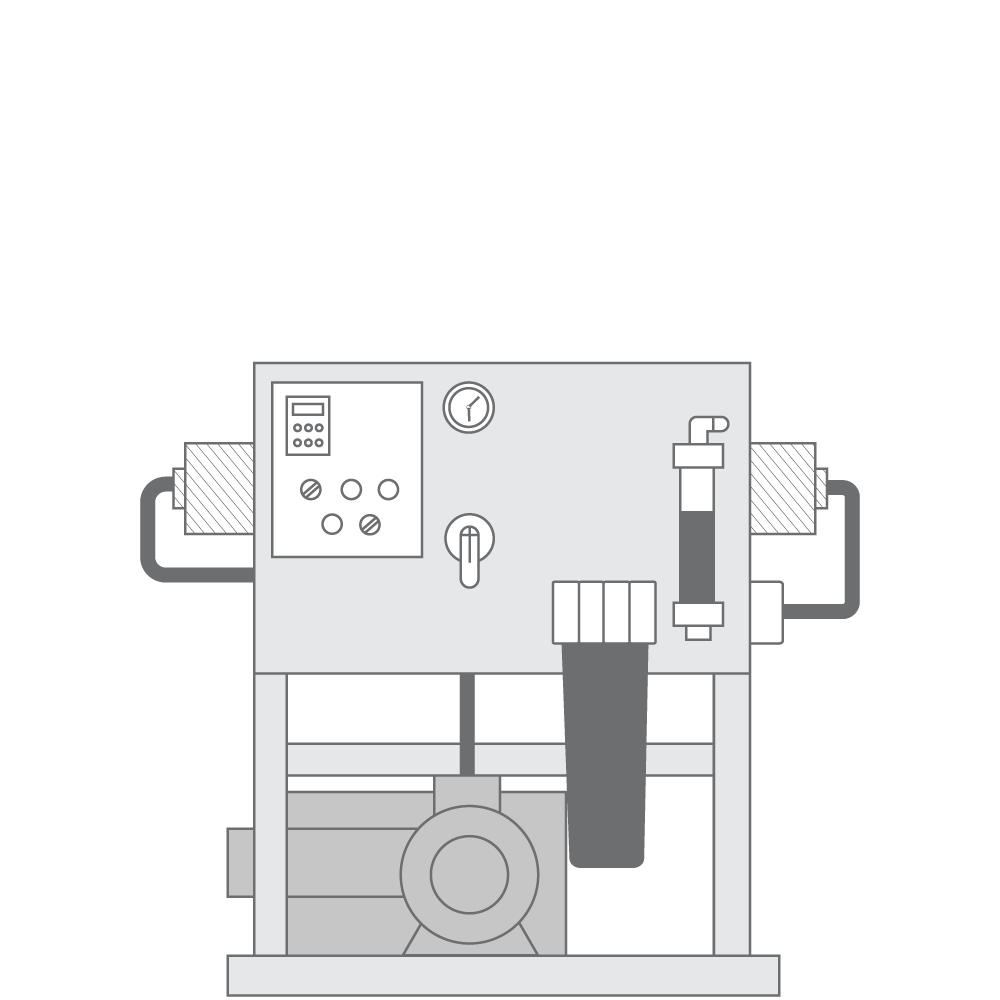
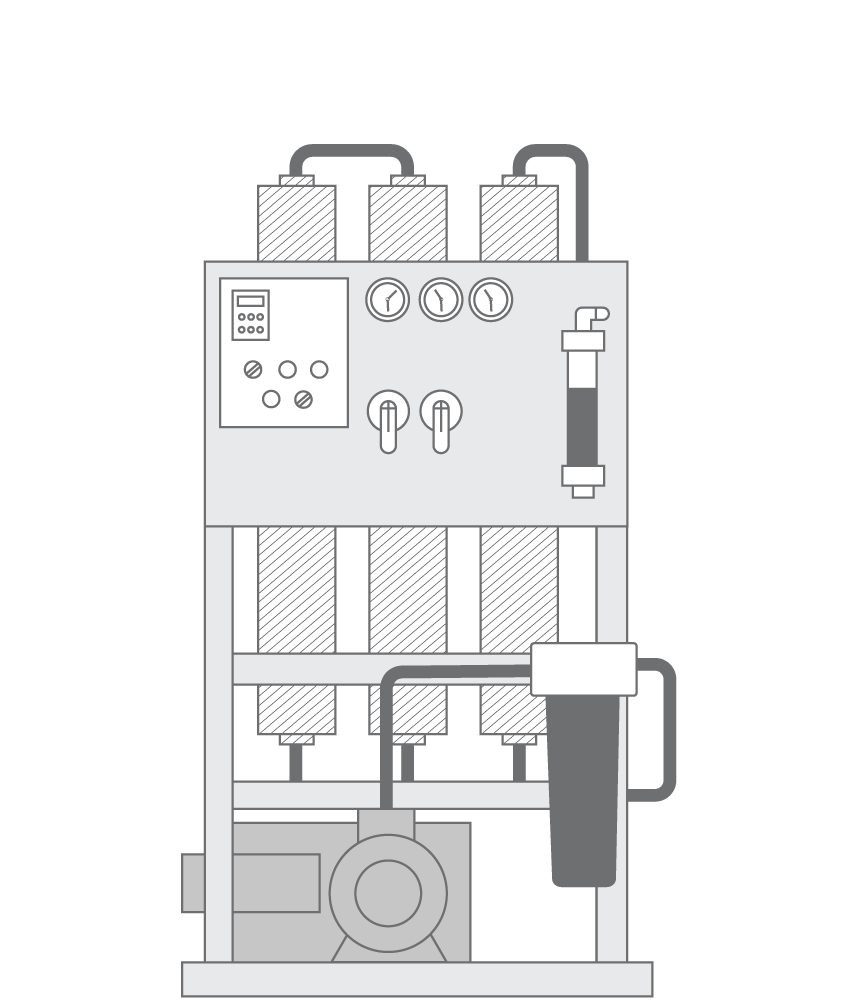
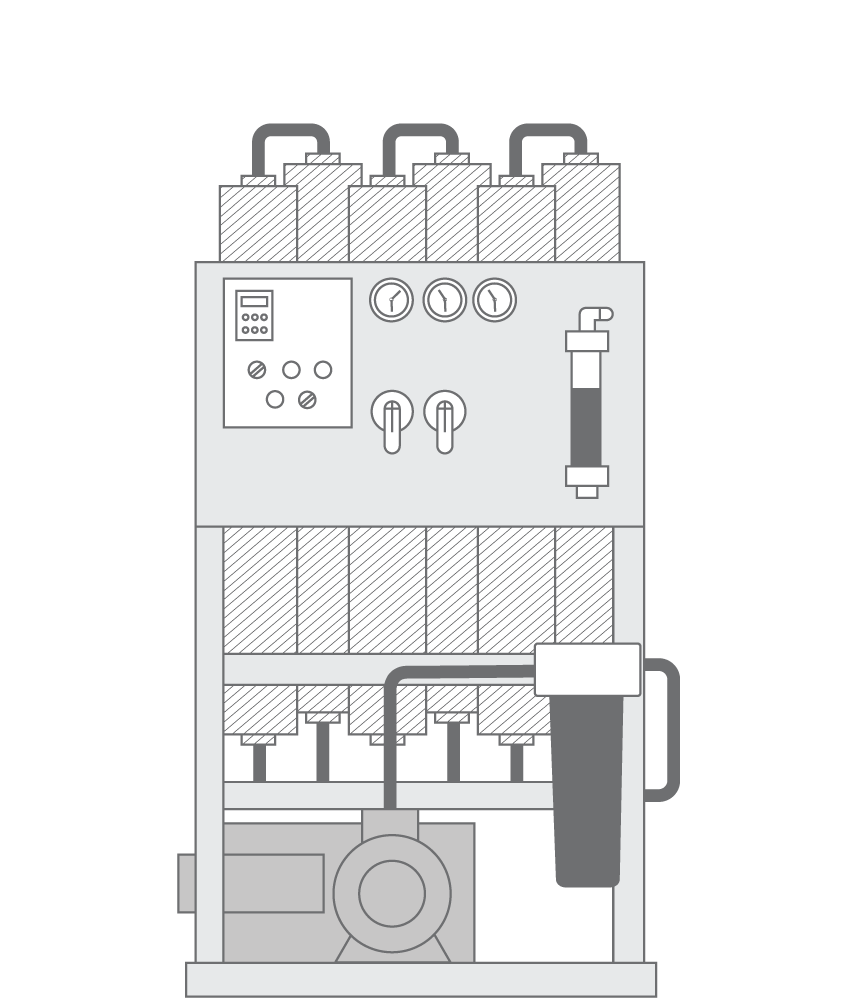
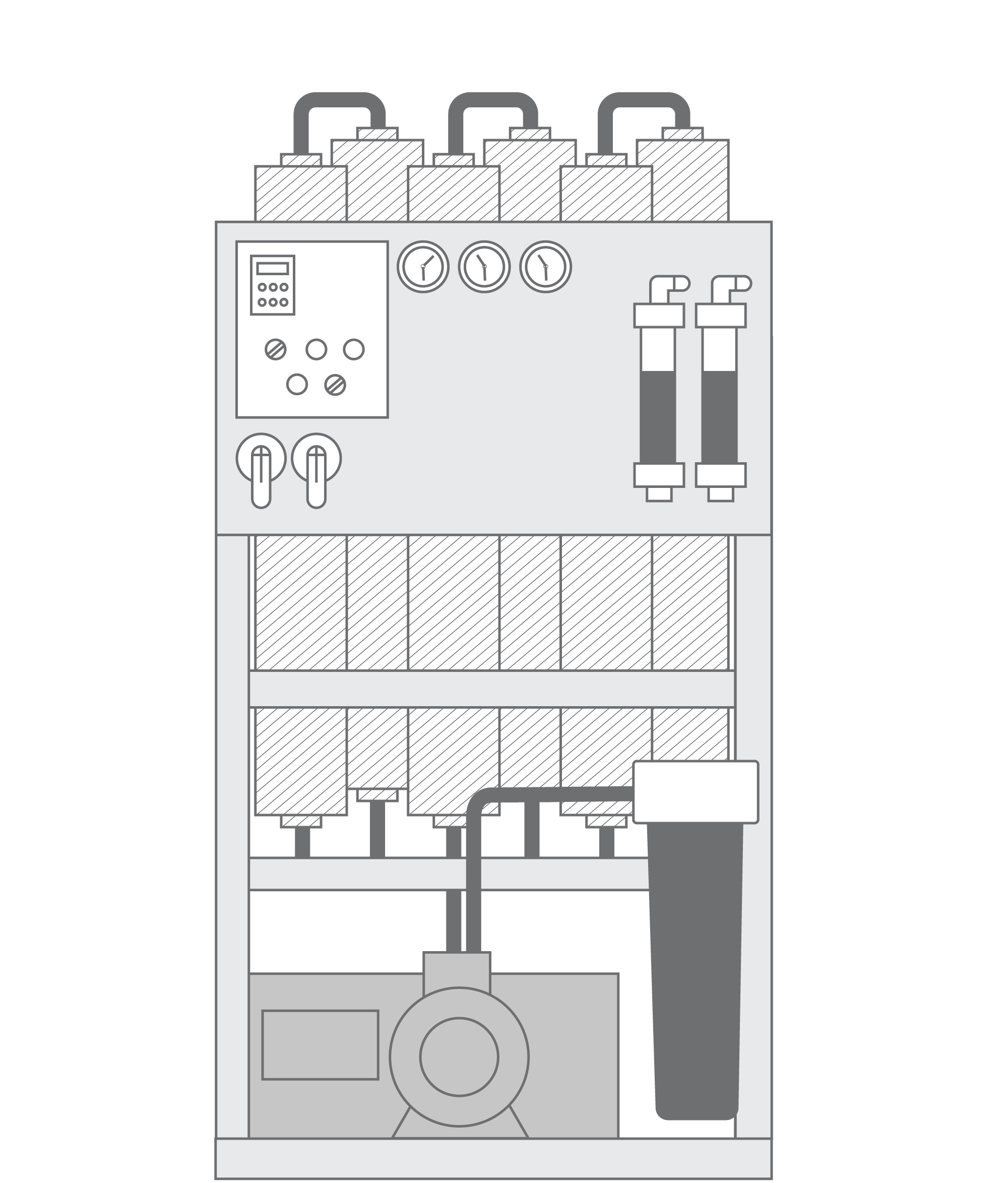
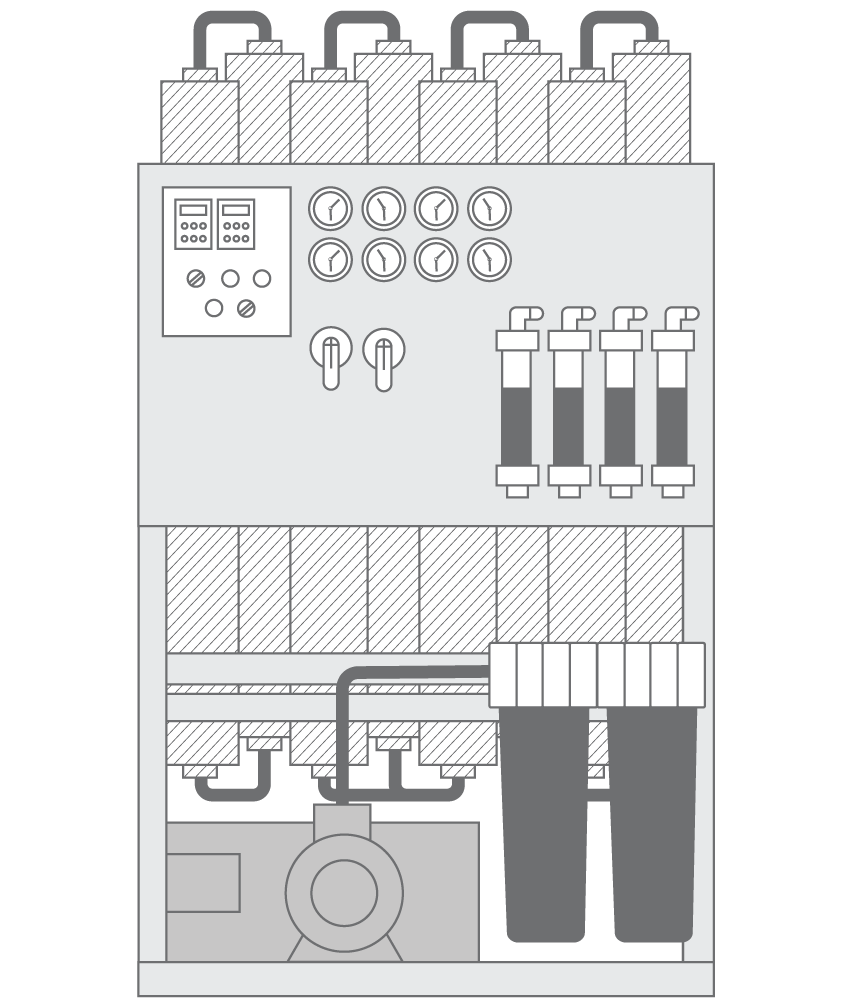
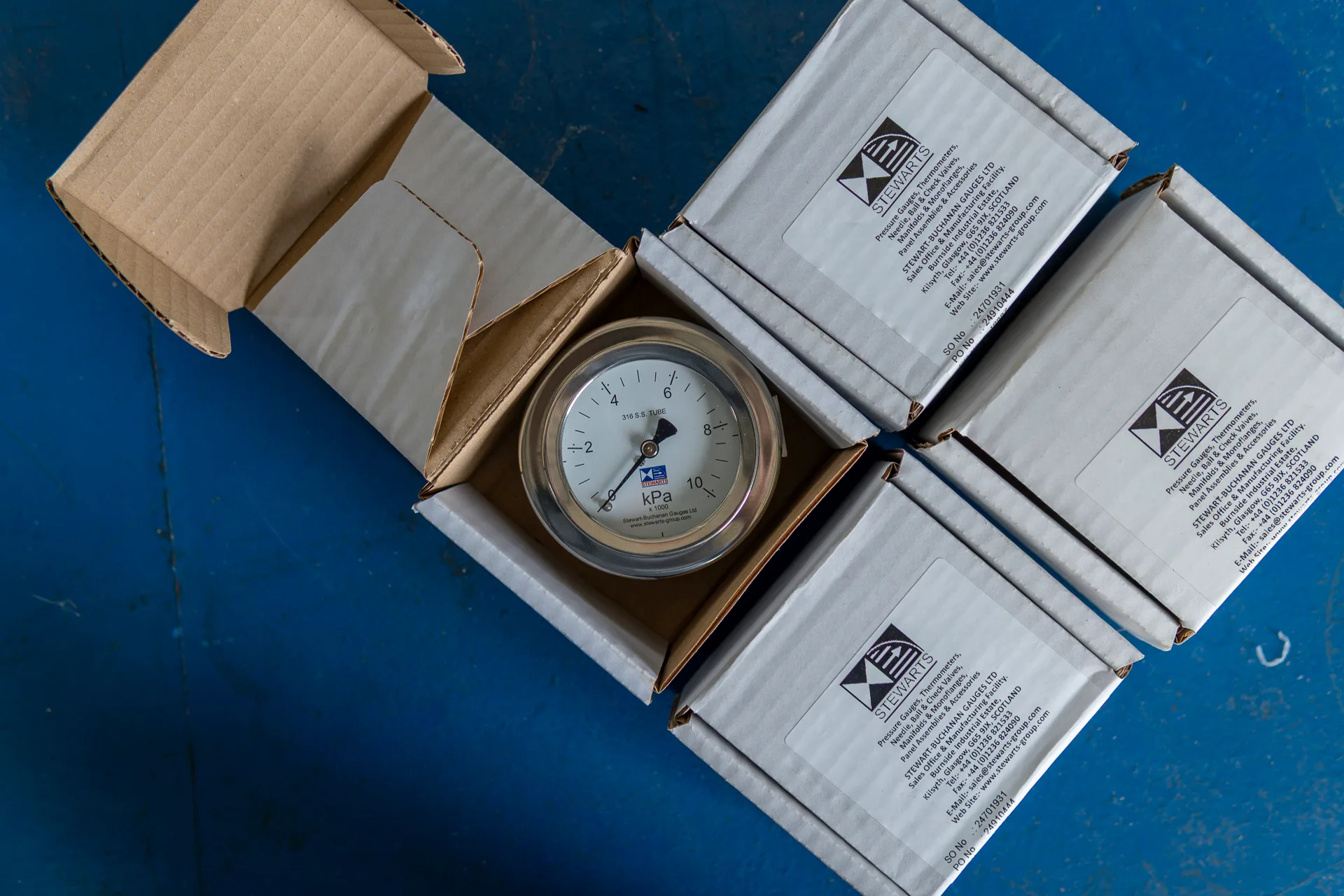
Extensive Spare Parts Catalogue
System FAQs
Answers to common questions about selecting, sizing and specifying a CITOR reverse osmosis system.
System footprint varies by capacity and configuration:
Compact Models (2,000–5,000 L/day):
- Dimensions: Approximately 1200mm (L) × 400–500mm (W) × 470–1000mm (H)
- Weight: 52–58 kg (dry weight)
- Mounting: Floor-mounted, can be skid-mounted for vessel installations
- Clearance required: 500mm all sides for maintenance access
Medium Models (10,000–20,000 L/day):
- Dimensions: Approximately 1500–2750mm (L) × 650mm (W) × 1000mm (H)
- Weight: 270–300 kg (dry weight, excluding water in system)
- Mounting: Floor-mounted on level surface
- Clearance required: 800mm access for membrane removal and servicing
Large Models (30,000+ L/day):
- Dimensions: 2750+mm (L) × 800+mm (W) × 1200+mm (H)
- Weight: 550+ kg depending on configuration
- Mounting: Requires structural support for weight
- Clearance required: 1000mm+ for maintenance and component access
CITOR can provide installation drawings and space planning for specific applications. Custom configurations (vertical mounting, split systems, containerised installations) available where standard footprints don't suit site constraints.
Power requirements vary by system capacity:
Small Systems (2,000–5,000 L/day):
- Single-phase 240V AC or Three-phase 415V AC options available
- Power consumption: 1.8–2.2 kW for standard models
- Standard Australian electrical connection
- Can operate from generator supply (appropriate sizing required)
Medium Systems (10,000–20,000 L/day):
- Three-phase 415V AC (standard)
- Power consumption: 5.5–7.5 kW
- Commercial electrical supply required
- Generator operation: Industrial-grade generator required
Large Systems (30,000+ L/day):
- Three-phase 415V AC
- Power consumption: 11+ kW depending on capacity
- Industrial electrical infrastructure
- Energy recovery devices available for systems >50,000 L/day to reduce power consumption
CITOR reverse osmosis systems produce water meeting or exceeding international drinking water standards.
From seawater source (typically 35,000–45,000 PPM TDS):
- Product water TDS: 150–500 PPM (97–99% reduction)
- Chloride: <100 PPM
- Sodium: <100 PPM
- Calcium/Magnesium: <30 PPM
- Bacterial content: >99.9% reduction
- Turbidity: <0.1 NTU
- pH: 6.0–7.5 (before post-treatment adjustment)
From brackish water source (typically 3,000–10,000 PPM TDS):
- Product water TDS: 50–200 PPM (95–98% reduction)
- Hardness: <10 PPM as CaCO₃
- Iron: <0.01 PPM
- Specific contaminant removal based on source chemistry
Yes. Custom reverse osmosis system design is a core CITOR capability. Standard models suit many applications, but unique requirements benefit from engineered-to-specification systems. Custom systems most commonly relate to space restrictions or component layouts for which standard units are not suitable.
Proper system sizing requires analysis of several factors:
1. Daily Water Demand
Typical consumption guidelines:
- Marine vessels: 40–80 litres per person per day
- Mining camps: 100–200 litres per person per day (includes showers, laundry, kitchen)
- Resort facilities: 200–400 litres per person per day (includes pools, landscaping, amenities)
- Industrial applications: Project-specific based on process requirements
2. Operating Schedule
Systems don't need to operate 24 hours daily. Many installations run 8–12 hours per day to meet daily requirements, however all CITOR units are rated for continuous duty.
3. Source Water Quality
Water chemistry affects production rate. High-salinity sources require higher pressure and may have lower recovery rates. Challenging chemistry may require pre-treatment that can foul membranes, damage components, and reduce effective capacity.
4. Storage Capacity
Most installations include product water storage tanks to buffer supply and demand variations. Adequate storage reduces required system oversizing and provides backup during maintenance.
CITOR engineers work with clients to analyse these factors and specify appropriate system capacity.
CITOR reverse osmosis systems typically achieve 95–99% removal of total dissolved solids (TDS), depending on source water chemistry and membrane selection. Specific rejection rates for common contaminants:
- Sodium chloride (salt): 97–99% rejection
- Calcium and magnesium (hardness): 96–98% rejection
- Nitrates: 90–95% rejection
- Heavy metals (lead, arsenic, cadmium): >98% rejection
- Bacteria and pathogens: >99.9% removal
- Viruses: >99% removal
For seawater sources (35,000–45,000 PPM TDS), product water typically measures <500 PPM TDS, well below the 1,000 PPM maximum for drinking water standards. Many CITOR systems produce water with <200 PPM TDS.
For specialized applications requiring ultra-pure water (pharmaceutical, laboratory, electronics manufacturing), two-pass RO systems or additional post-treatment can achieve <10 PPM TDS.
Product water may require minor re-mineralization for palatability and corrosion control in distribution systems, as highly purified water can be slightly aggressive toward plumbing materials.
Seawater and brackish water desalination differ primarily in source water salinity and the resulting operating requirements:
Seawater Desalination (SWRO):
- Source TDS: 7,000–45,000 PPM (parts per million)
- Operating pressure: 20–55 bar (300–800 PSI)
- Applications: Coastal facilities, marine vessels, offshore platforms, island resorts
- Energy consumption: Higher due to increased pressure requirements
- Membrane type: Sea water membrane, specifically designed for high-salinity applications
- Recovery rate: Typically 10–30% of feed water converted to product water
Brackish Water Desalination (BWRO):
- Source TDS: 1,000–7,000 PPM
- Operating pressure: 10–15 bar (150–250 PSI)
- Applications: Agricultural bore water, inland groundwater, industrial sources
- Energy consumption: Significantly lower than seawater treatment
- Membrane type: Brackish water membranes, optimized for moderate salinity levels
- Recovery rate: Typically 60–85% depending on water chemistry
Both processes use reverse osmosis membrane technology, but system components (pumps, pressure vessels, membranes, materials) are specified differently based on source water characteristics. A brackish water system cannot effectively treat seawater—it lacks the pressure capacity and membrane specifications required for high-salinity applications.
Your Source Water Determines Your System
Total dissolved solids (TDS) is the starting point for every reverse osmosis system we design. Knowing what's in your source water tells us which technology — seawater, brackish, or low-salinity — will deliver reliable output at the lowest possible operating cost.


Your conditions drive our design
Tell us your constraints — space, layout, power, or unusual source chemistry — and we'll engineer a system around them.