Every System Engineered Around Your Water
Requirements & Site Assessment
Before any water is sampled, we define exactly what your system needs to achieve and the conditions it must operate within. This ensures every engineering decision is grounded in your specific application.
This stage defines the brief. A clear, complete brief is what allows the sampling, analysis, and design that follow to produce a system that fits your application precisely.
Process Details
- Water source characteristics and variability — source type (seawater, bore, dam, brackish), known quality issues, and seasonal or operational fluctuation
- Production capacity and demand patterns — daily volume, peak demand, and whether output needs to vary with seasonal or operational change
- Site constraints and installation environment — space, weight, access, climate, and exposure
- Available utilities — power supply (single/three-phase, DC, solar/renewable), space, and discharge pathways
- Regulatory and compliance requirements — drinking water standards and any application-specific obligation
- Budget parameters and project timeline
- Operator skill level and maintenance capabilities — so the system is matched to who will run and maintain it
Water Sample Collection
For bore, dam, or brackish water supply we collect samples from your source to undergo proper sampling protocols, ensuring accurate analysis and optimal system design.
Sample collection methodology is critical to accurate analysis. Improper sampling introduces contamination, degassing, or chemical changes that compromise laboratory results and subsequent system design.
Sampling methodology
- Sampling containers prepared for specific analysis requirements (sterilized bottles for biological testing, specific containers for metals analysis)
- Collection protocols detailing proper sampling depth, purging procedures, and handling requirements
- Chain of custody documentation for sample identification and analysis tracking
- On-site sampling services available for critical projects or remote locations
Sampling for seawater
Sampling typically occurs at proposed intake location at depth representative of actual operating conditions. Coastal seawater chemistry varies by location, season, and depth—accurate sampling reflects these variables.
Sampling for brackish water
Sampling requires purging the well to obtain representative water from the aquifer, not stagnant water from the bore casing. Sample timing affects results: water chemistry can vary seasonally and with extraction rate.
Water Analysis
Comprehensive testing identifies TDS, pH, hardness, contaminants, and all parameters affecting RO performance. This data forms the foundation for accurate system specification.
Laboratory analysis is performed by accredited facilities using standardized methods. Results are compared against established water quality databases to identify potential operational challenges and required treatment approaches.
Physical Parameters
- Total Dissolved Solids (TDS): Primary determinant of required operating pressure and membrane selection
- Temperature: Affects membrane permeability, pump specifications, and energy recovery potential
- Turbidity: Indicates pre-treatment filtration requirements
Chemical Parameters.
- pH: Influences scaling potential and membrane selection
- Hardness (Calcium, Magnesium): Determines scaling risk and pre-treatment requirements
- Iron and Manganese: Can cause irreversible membrane fouling if not removed
- Silica: Affects maximum recovery rate and scaling potential
- Chloride, Sulfate: Impact membrane selection and materials compatibility
- Alkalinity: Influences pH stability and carbonate scaling potential
Biological Parameters
- Bacterial count: Determines sterilization requirements and membrane biofouling risk
- Organic content (TOC): Affects membrane fouling characteristics
Specialised Analysis
- Heavy metals: For industrial or contaminated sources
- Specific contaminants: Based on source type and known regional water quality issues
- Silt Density Index (SDI): Measures fouling potential and pre-treatment effectiveness
Software Modelling
Advanced desalination software simulates your water chemistry against membrane types and system configurations to predict performance, output, and component longevity.
This modelling prevents costly errors: undersized systems that fail to meet capacity, oversized systems with excessive capital cost, inappropriate membrane selection leading to premature failure, or scaling/fouling issues that compromise performance.
Modelling Methodology
- Source water chemistry from laboratory analysis
- Membrane manufacturer specifications for various membrane types and configurations
- *Operating parameters: pressure, temperature, recovery rate, flux rate
- Pre-treatment effectiveness based on specified filtration and conditioning
- System configuration: single-pass or two-pass, staging arrangements, number of pressure vessels
Software Simulations:
- Product water quality: Expected TDS, specific contaminant rejection rates
- Production capacity: Actual output under specified operating conditions
- Recovery rate: Percentage of feed water converted to product water
- Scaling potential: Saturation indices for calcium carbonate, calcium sulfate, barium sulfate, silica
- Membrane life expectancy: Based on water chemistry and operating conditions
- Energy consumption: Pump power requirements and energy recovery potential
System Design & Component Selection
We specify the optimal membrane selection, pre-treatment, capacity, and materials—engineered specifically for your application.
Every specification is project-specific. Generic systems do not account for actual operating conditions, source water variability, or site-specific constraints (power availability, space limitations, operator skill level, maintenance capabilities).
Pre-Treatment Design:
- Source water chemistry from laboratory analysis
- Membrane manufacturer specifications for various membrane types and configurations
- *Operating parameters: pressure, temperature, recovery rate, flux rate
- Pre-treatment effectiveness based on specified filtration and conditioning
- System configuration: single-pass or two-pass, staging arrangements, number of pressure vessels
Reverse Osmosis Array:
- Product water quality: Expected TDS, specific contaminant rejection rates
- Production capacity: Actual output under specified operating conditions
- Recovery rate: Percentage of feed water converted to product water
- Scaling potential: Saturation indices for calcium carbonate, calcium sulfate, barium sulfate, silica
- Membrane life expectancy: Based on water chemistry and operating conditions
- Energy consumption: Pump power requirements and energy recovery potential
Pump Selection:
- Pump capacity matched to required flow rate and pressure
- Motor specifications: single-phase, three-phase, variable frequency drive
- Materials selection for corrosion resistance: 316 stainless steel, specialized alloys
Materials and Construction:
- Frame construction: electropolished 316 stainless steel, powder-coated aluminum
- Piping and fittings: corrosion-resistant materials matched to water chemistry
- Pressure vessels: certified for operating pressure and environment
- Electrical components: IP-rated for environmental protection
Control and Monitoring:
- Automated control systems with touchscreen interface
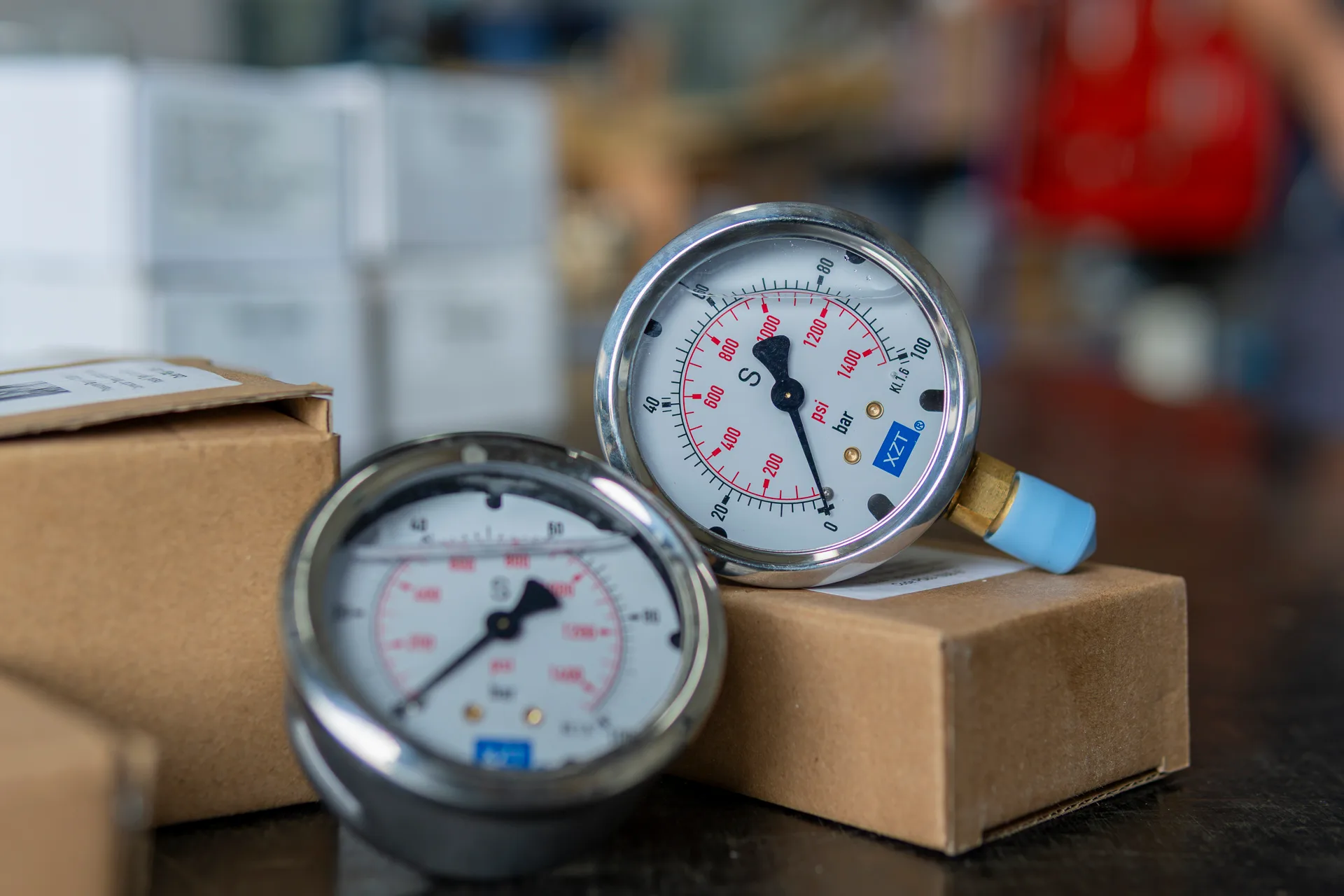
- Operating parameters: pressure gauges, flow meters, salinity monitors
- Safety systems: low-pressure cutoff, high-pressure relief, dump valve control Fresh water flushing automation for membrane preservation
- Fresh water flushing automation for membrane preservation
Manufacturing & Testing
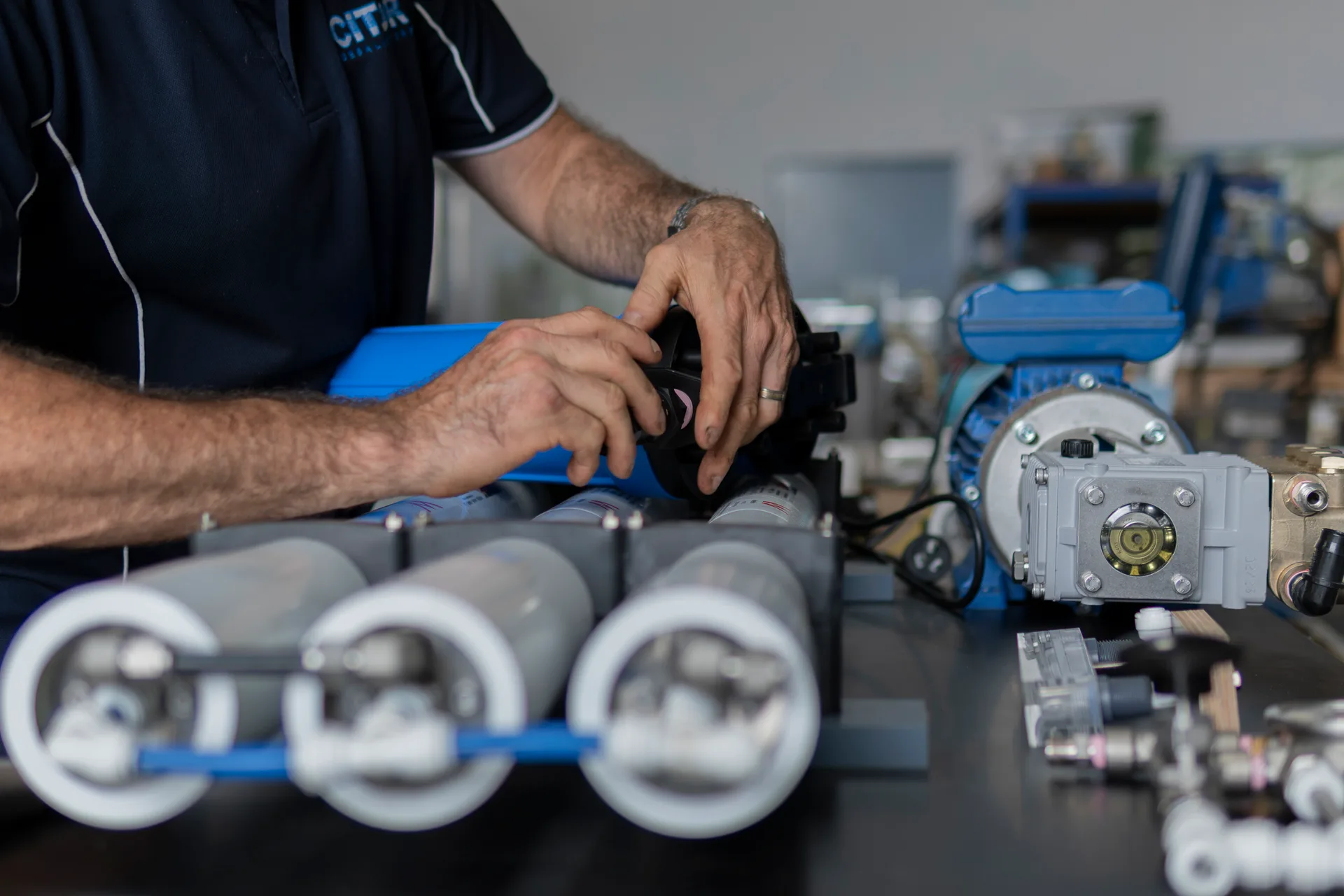
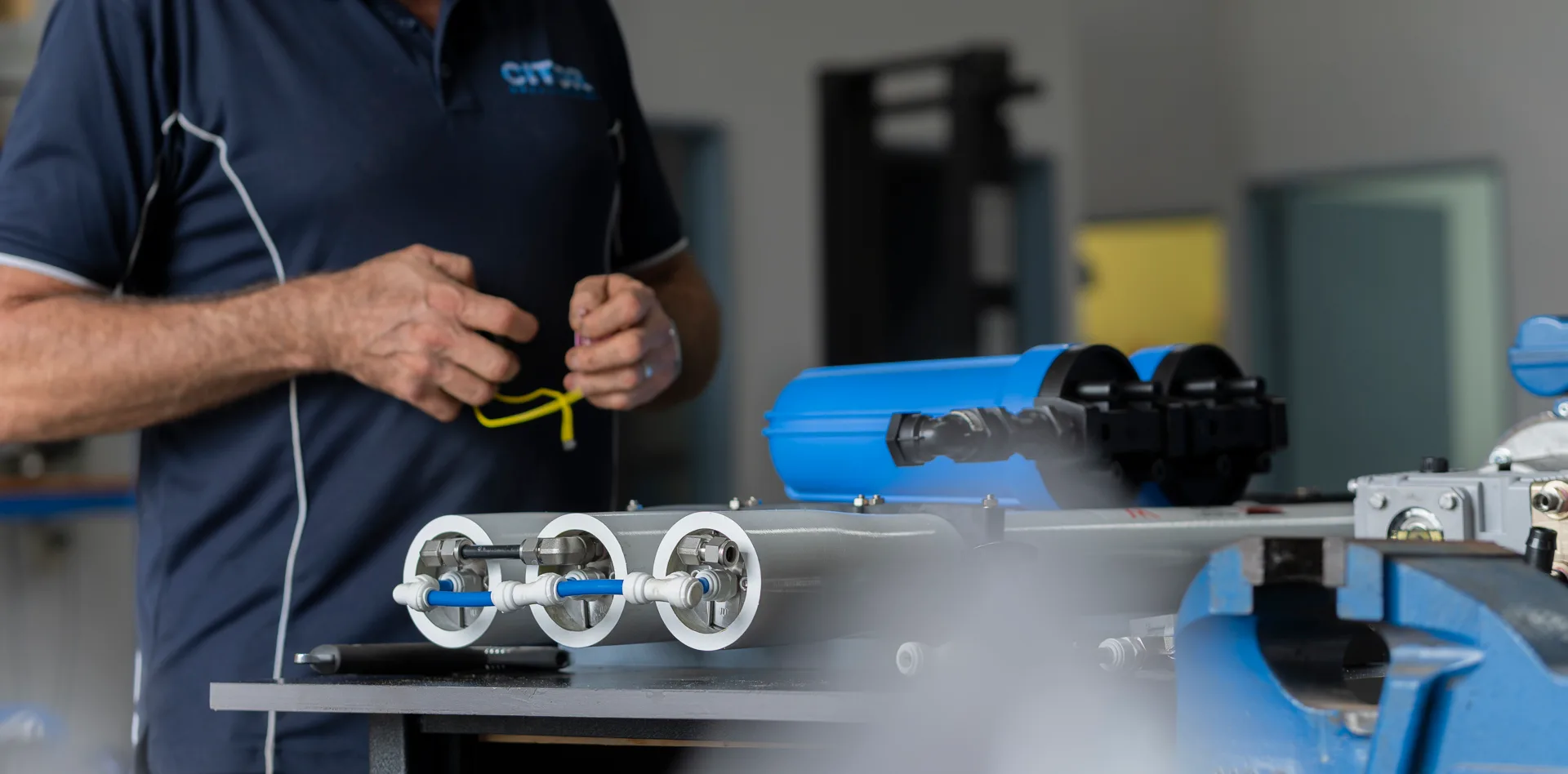
Custom systems hand-built at our Perth facility with rigorous quality control, undergo comprehensive testing before dispatch.
Hand-built manufacturing is not slower or less efficient—it's more thorough. Complex assemblies benefit from skilled technician attention that identifies potential issues before dispatch, not during commissioning on site.
Test documentation accompanies every system, providing baseline performance data for commissioning and future reference.
Manufacturing Process:
Systems are fabricated at our Fremantle facility following documented quality control procedures:
- Materials verification ensuring specified grades and certifications
- Precision fabrication of frame construction, piping assemblies, and component mounting
- Electrical assembly following Australian Standards with proper safety certification
- Pressure testing of all high-pressure components and assemblies
- Control system programming specific to project requirements
- Factory acceptance testing with documented performance verification
Testing protocols verify:
- Membrane seating and sealing in pressure vessels
- Pump performance at specified pressure and flow conditions
- Control system functionality including all safety interlocks and automatic sequences
- Electrical safety and compliance with certification requirements
- Leak testing of all connections and pressure boundaries
Commissioning & Potable Water
Your custom-built system delivers consistent, high-quality drinking water with predictable efficiency and lasting performance.
Commissioning establishes baseline performance metrics used for ongoing monitoring and maintenance planning. Once commissioned, we provide ongoing technical support, spare parts supply, and maintenance services to ensure long-term system reliability.
Installation & Commissioning:
CITOR provides commissioning services including:
- System installation guidance and technical support
- Startup procedures following manufacturer protocols
- Performance verification confirming system meets specified output and quality
- Operator training covering routine operation, basic maintenance, and troubleshooting
- Documentation handover including operating manuals, maintenance schedules, and spare parts recommendations
Product Water Quality:
CITOR reverse osmosis systems produce water meeting or exceeding:
- International Drinking Water Standards
- Australian Drinking Water Guidelines (ADWG)
- Specific project requirements for specialized applications
Typical product water specifications:
- TDS reduction: 95-99% depending on source water and membrane selection
- Bacterial reduction: >99.9% removal of bacteria and pathogens
- Turbidity: <0.1 NTU in product water
- Heavy metal removal: Exceeding drinking water standards
Product water may require minor adjustment (re-mineralization, pH correction) for specific applications, but core purification is achieved through the reverse osmosis process.
Ongoing Performance:
Properly maintained CITOR systems deliver consistent performance for decades. Critical success factors include:
- Adherence to maintenance schedules for pre-filtration and membrane cleaning
- Use of specified chemicals and replacement parts
- Monitoring of key performance indicators (product water quality, system pressure, recovery rate)
- Timely membrane replacement based on performance degradation, not fixed schedules
Engineering FAQs
Answers to common questions about reverse osmosis, water quality and the CITOR engineering process.
Reverse osmosis does NOT effectively remove:
- Dissolved gases (hydrogen sulfide, methane, radon): Pass through membranes dissolved in water
- Very small uncharged molecules: Some volatile organic compounds
- Tastes and odours from dissolved gases: Require additional treatment (degassing, carbon filtration)
For comprehensive contaminant removal from complex sources, CITOR designs integrated treatment systems combining reverse osmosis with pre-treatment (iron removal, degassing) and post-treatment (carbon polishing, UV sterilisation) as required.
CITOR reverse osmosis systems produce water meeting or exceeding international drinking water standards.
From seawater source (typically 35,000–45,000 PPM TDS):
- Product water TDS: 150–500 PPM (97–99% reduction)
- Chloride: <100 PPM
- Sodium: <100 PPM
- Calcium/Magnesium: <30 PPM
- Bacterial content: >99.9% reduction
- Turbidity: <0.1 NTU
- pH: 6.0–7.5 (before post-treatment adjustment)
From brackish water source (typically 3,000–10,000 PPM TDS):
- Product water TDS: 50–200 PPM (95–98% reduction)
- Hardness: <10 PPM as CaCO₃
- Iron: <0.01 PPM
- Specific contaminant removal based on source chemistry
Proper system sizing requires analysis of several factors:
1. Daily Water Demand
Typical consumption guidelines:
- Marine vessels: 40–80 litres per person per day
- Mining camps: 100–200 litres per person per day (includes showers, laundry, kitchen)
- Resort facilities: 200–400 litres per person per day (includes pools, landscaping, amenities)
- Industrial applications: Project-specific based on process requirements
2. Operating Schedule
Systems don't need to operate 24 hours daily. Many installations run 8–12 hours per day to meet daily requirements, however all CITOR units are rated for continuous duty.
3. Source Water Quality
Water chemistry affects production rate. High-salinity sources require higher pressure and may have lower recovery rates. Challenging chemistry may require pre-treatment that can foul membranes, damage components, and reduce effective capacity.
4. Storage Capacity
Most installations include product water storage tanks to buffer supply and demand variations. Adequate storage reduces required system oversizing and provides backup during maintenance.
CITOR engineers work with clients to analyse these factors and specify appropriate system capacity.
Reverse osmosis (RO) desalination is a membrane-based water purification process that removes dissolved salts, minerals, and contaminants from seawater, brackish water, or contaminated sources to produce fresh drinking water.
The process works by applying pressure greater than the natural osmotic pressure to force water molecules through semi-permeable membranes. These membranes contain microscopic pores that allow water molecules to pass while rejecting larger dissolved salt ions, minerals, and other contaminants.
The result is high-quality drinking water meeting international standards for total dissolved solids, bacterial content, and other water quality parameters.
CITOR provides comprehensive after-sales support ensuring long-term system reliability:
- Immediate post-installation performance monitoring and operator support
- Ongoing technical support via phone and email
- Preventive maintenance programs (client-performed or contracted)
- Spare parts availability with rapid dispatch
- System upgrades and modifications as requirements change
- Long-term engineering support throughout system life
Relationship continues well beyond installation—CITOR maintains technical documentation and support for systems decades old.
Standard systems: 2–6 weeks from contact to commissioning
Custom systems: 2–16 weeks from contact to commissioning
Beyond Salinity — Targeting Specific Contaminants
Source water rarely fails on salt alone. Reverse osmosis removes dissolved metals, nutrients, and biological matter that standard filtration leaves behind, bringing brackish groundwater and contaminated sources up to drinking water and process standards.
The minerals that scale equipment and ruin taste — TDS, calcium and magnesium hardness, iron, and manganese. Reverse Osmosis strips them out to protect downstream plant and deliver consistently clean water.
Nitrates, fluoride, arsenic, and heavy metals common in agricultural bore water and remote groundwater. RO membranes reject these to levels that meet Australian drinking water guidelines.
Bacteria, pathogens, organic compounds, and turbidity. Membrane rejection paired with the right pre-treatment and optional UV gives a multi-barrier defence for safe potable supply.
Extensive Spare Parts Catalogue