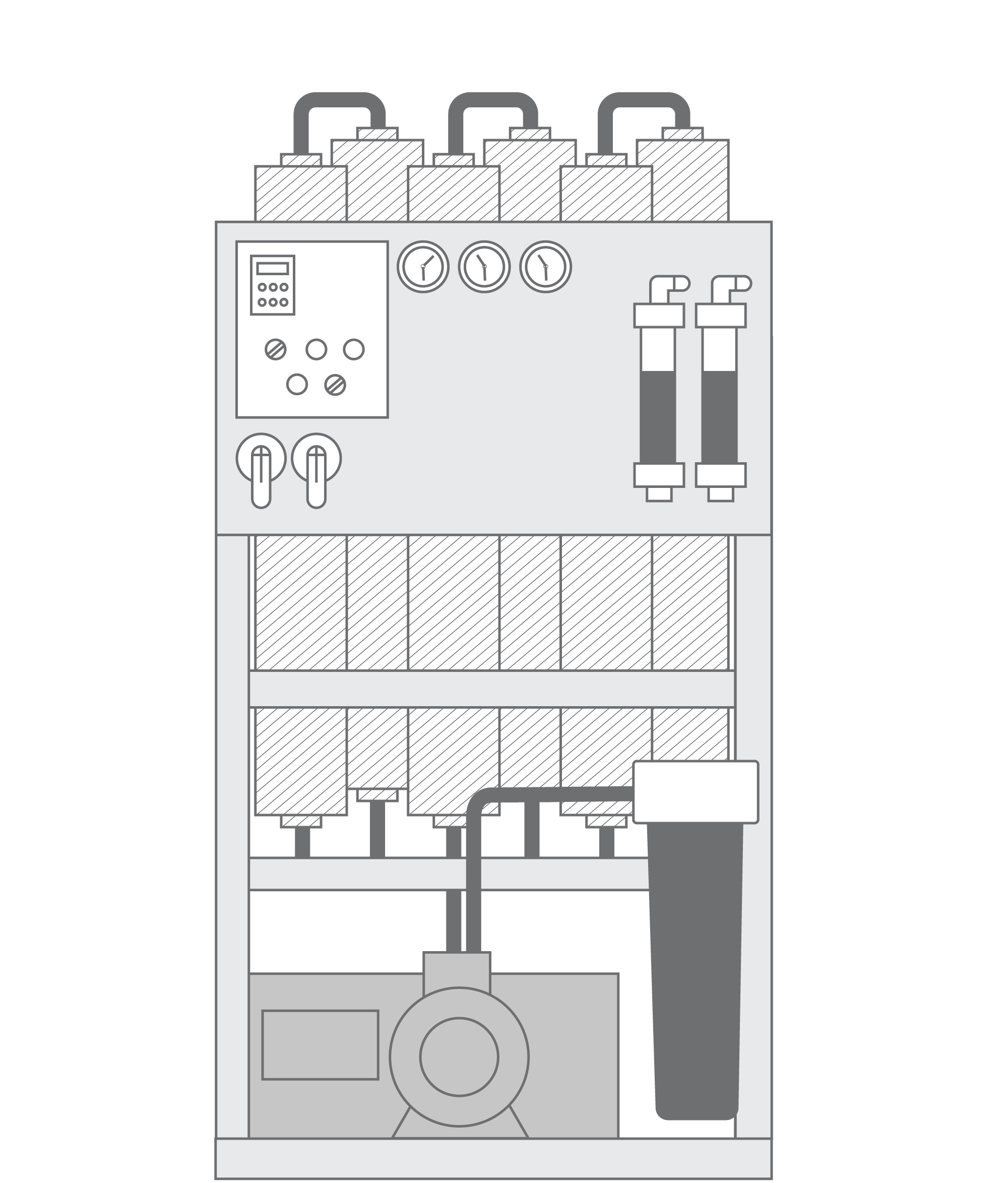
The AVRO 12000SS is CITOR's largest brackish water reverse osmosis system, producing 2,000 litres per hour (approximately 48,000 L/day) from feed water up to 4,000 PPM TDS.
Powered by a 380/415 VAC three-phase supply, it uses eight FRP membrane housings in a 4 × 2 configuration and a 316 stainless high-pressure pump on a stainless steel frame. It is designed for laboratories, hospitals, farming and industry requiring high-volume, reliable water purity. Recirculation and CIP connections are standard.
Technical Specifications
Control & Automation Features
Control & Automation
- AVRO Controller with conductivity meter (standard)
- Main isolation switch with door interlock
- Manual override switches in control panel
- Float level control (standard option)
- Automatic RO flush
- Adjustable recovery
- Recirculation (standard option)
- CIP connections
- Quality needle valves
- Barrel unions pre and post most components
- Adjustable levelling feet
- Schedule 80 uPVC pipework
Safety Systems
- Low-pressure feed safety switch
- Main isolation switch with door interlock
Included Consumables
- Replaceable pre-filter cartridges
- RO membranes
- Membrane cleaning chemicals available from CITOR
Performance Parameters
- Feed water: brackish, up to 4,000 PPM TDS
- Power consumption: ~3.0 kW during operation
- Power supply: 380/415 VAC three phase
- Adjustable recovery
- Continuous conductivity monitoring via AVRO controller
- Automatic RO flush for membrane preservation
Detailed operating pressure, recovery rate and product-water TDS figures to be confirmed by CITOR.
Applications
Laboratories
Hospitals
Farming
Industrial Facilities
Installation Requirements
Electrical Connection
- Supply: 380/415 VAC Three Phase
- Main isolation switch with door interlock
- Proper electrical earth required
Physical Installation
- Floor-mounted on a level surface with adjustable levelling feet
- Clearance for maintenance access recommended
Plumbing
- Feed, product and concentrate connections required
- CIP connections provided
- Schedule 80 uPVC pipework with barrel unions for servicing
Request System Quote
View Similar Brackish Systems
FAQs
Answers to common questions about powering, installing, running and maintaining your CITOR system.
CITOR reverse osmosis systems are designed and manufactured to Australian and international standards:
Electrical Standards:
AS/NZS 3000 (Wiring Rules): Australian Standard for electrical installations.
- All electrical work complies with AS/NZS 3000 requirements
- Certified by licensed electricians
- Compliance documentation provided
AS/NZS 3008 (Cable Selection): Cable sizing and protection standards.
AS/NZS 60204 (Safety of Machinery – Electrical Equipment): Industrial machinery electrical safety.
- Emergency stop systems
- Safety interlocks
- Electrical protection devices
IP Rating: Electrical enclosure protection against dust and water ingress.
- Control panels: Minimum IP54 (dust protected, splash resistant)
- Outdoor installations: IP65 or higher specifications available
Mechanical Standards:
AS/NZS 1210 (Pressure Equipment): Unfired pressure vessels.
- Pressure vessels designed and manufactured to AS/NZS 1210 where required
- Design verification and documentation
- Pressure testing and certification
AS 4041 (Pressure Piping): Pressure piping design and fabrication.
Yes, with appropriate environmental protection. CITOR systems can operate outdoors when:
- Enclosed in weather-protected housing (equipment shelter, plant room)
- Protected from direct weather exposure (rain, hail, extreme sun)
- Provided with temperature management (ventilation, cooling, heating as required)
- Electrical components meet IP rating requirements for environment
CITOR can specify environmental protection requirements based on installation location, climate data, and site-specific conditions. Inadequate environmental protection significantly shortens equipment life and increases maintenance requirements.
System footprint varies by capacity and configuration:
Compact Models (2,000–5,000 L/day):
- Dimensions: Approximately 1200mm (L) × 400–500mm (W) × 470–1000mm (H)
- Weight: 52–58 kg (dry weight)
- Mounting: Floor-mounted, can be skid-mounted for vessel installations
- Clearance required: 500mm all sides for maintenance access
Medium Models (10,000–20,000 L/day):
- Dimensions: Approximately 1500–2750mm (L) × 650mm (W) × 1000mm (H)
- Weight: 270–300 kg (dry weight, excluding water in system)
- Mounting: Floor-mounted on level surface
- Clearance required: 800mm access for membrane removal and servicing
Large Models (30,000+ L/day):
- Dimensions: 2750+mm (L) × 800+mm (W) × 1200+mm (H)
- Weight: 550+ kg depending on configuration
- Mounting: Requires structural support for weight
- Clearance required: 1000mm+ for maintenance and component access
CITOR can provide installation drawings and space planning for specific applications. Custom configurations (vertical mounting, split systems, containerised installations) available where standard footprints don't suit site constraints.
Power requirements vary by system capacity:
Small Systems (2,000–5,000 L/day):
- Single-phase 240V AC or Three-phase 415V AC options available
- Power consumption: 1.8–2.2 kW for standard models
- Standard Australian electrical connection
- Can operate from generator supply (appropriate sizing required)
Medium Systems (10,000–20,000 L/day):
- Three-phase 415V AC (standard)
- Power consumption: 5.5–7.5 kW
- Commercial electrical supply required
- Generator operation: Industrial-grade generator required
Large Systems (30,000+ L/day):
- Three-phase 415V AC
- Power consumption: 11+ kW depending on capacity
- Industrial electrical infrastructure
- Energy recovery devices available for systems >50,000 L/day to reduce power consumption
Membrane service life varies significantly based on source water quality and maintenance practices:
- Well-maintained systems with good source water: 4–7 years
- Average conditions with proper maintenance: 3–5 years
- Challenging chemistry or inadequate maintenance: 1–3 years
Membrane performance gradually declines over time. Replacement is indicated when product water quality degrades below acceptable levels or when required operating pressure increases significantly to maintain output.
Proper maintenance ensures long-term reliability and consistent performance. CITOR systems are designed for straightforward maintenance by operators without specialised training. Please note that in practice, maintenance schedules differ — they are primarily dependent on hours of use and the environment in which the equipment is operating. Below is a guide to a top tier maintenance schedule.
Daily Operations:
- Visual inspection of operating parameters (pressure, flow rate, salinity)
- Verification of automatic fresh water flushing cycles
- General observation for leaks or unusual operation
Weekly Maintenance:
- Clean pre-filters or replace filter cartridges (depending on source water quality)
- Inspect and clean intake screens (seawater applications)
- Record operating parameters for trend monitoring
Monthly Maintenance:
- Detailed inspection of all system components
- Check and adjust chemical dosing systems (if fitted)
- Inspect pump seals and mechanical components
- Review recorded data and performance trends
Quarterly or Semi-Annual Maintenance:
- Clean RO membranes using specified cleaning procedures (if applicable)
- Service pumps according to manufacturer recommendations
- Comprehensive system inspection and testing
Annual or Biennial Maintenance:
- Major component servicing or replacement based on wear
- Complete system performance evaluation
- Seasonal preventative maintenance and component replacement if required
- Pressure vessel inspection (if required by certification)
12-Month Manufacturing Warranty covering manufacturing defects in materials and workmanship. Includes frame, pumps, pressure vessels, electrical components, control systems, piping, and fittings. The warranty is subject to commissioning and operation as per CITOR factory requirements.
Written performance data specifies production capacity, product water quality, recovery rate, and operating parameters. Factory testing is performed before dispatch with results documented.
Extensive Spare Parts Catalogue
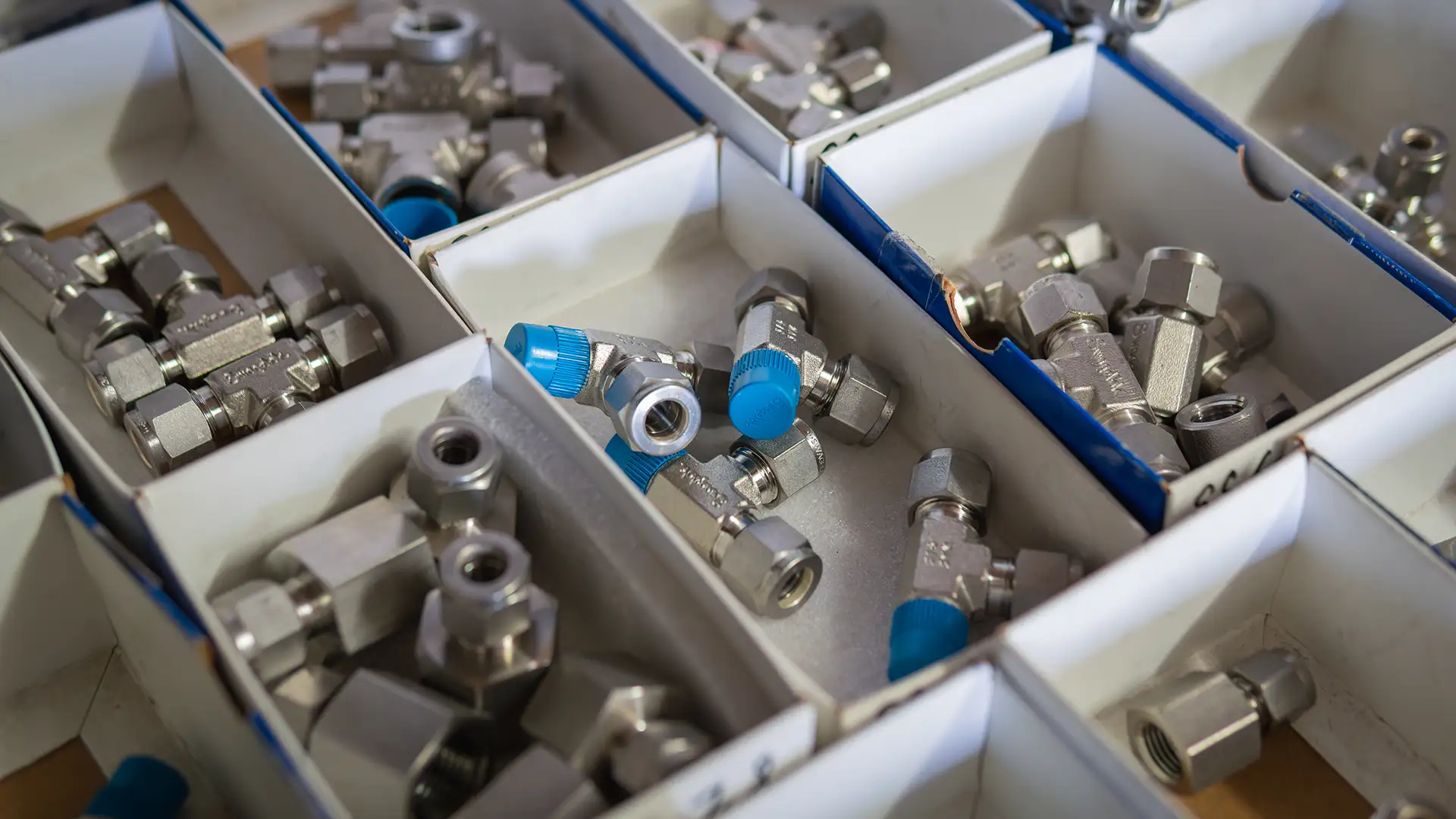
Perth-Based Manufacturing & Quality Control
Hand-built construction is not a marketing claim—it's an engineering methodology. Complex membrane assemblies, high-pressure pump configurations, and control system integration require skilled fabrication and testing that cannot be replicated in mass production environments.
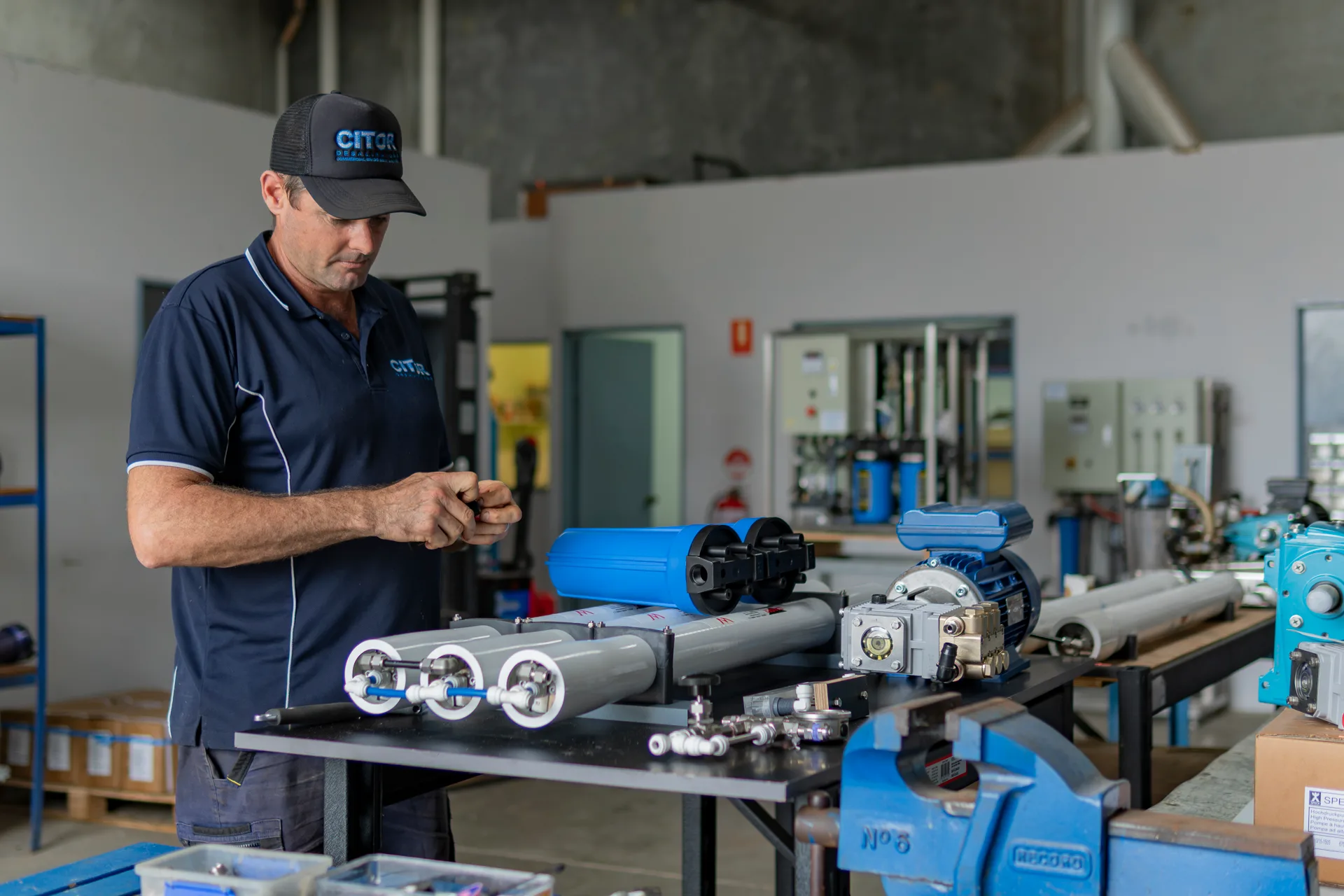
Water Security Where Infrastructure Ends
Remote and off-grid sites can't afford downtime. CITOR reverse osmosis systems are designed for ultra-low-maintenance operation, simple servicing, and continuous output in marine, mining, and island resorts and tourism.